

3 areas
Monitoring, WhatsApp access and support for chronic condition care.
Between a warning sign and a response, a network needs to be connected.
Saúde Responsiva organises information, communication and follow-up to bring patients, carers, teams and managers closer together. Technology supports care coordination: recognising needs, assigning responsibilities and tracking what happens after each referral.
Explore the programme
From first contact to continued care at home, the proposal integrates assessment of the municipal care network, digital access and follow-up for people with chronic conditions. Each piece of information must reach the team able to act, with records, accountability and response tracking.
Monitoring, WhatsApp access and support for chronic condition care.
Eligibility, consent, initial assessment, configuration and follow-up.
Patient, carer, primary care and hospital connected throughout care.
A professional structure to track requests, organise information, support care and coordinate responses across the network. Team composition and workflows are defined according to local needs.
A digital channel to receive requests, collect initial information and help direct people to services. Appointment requests, reminders and guidance help organise access to primary care.
Patient organisation, risk stratification, care history and remote monitoring, with or without a device, according to inclusion criteria and the care plan.

Health VUCA Prime is the municipal care network assessment stage. It brings together data and indicators to examine health needs, service use, prevention opportunities and primary care response capacity.
Analysis of available information on services, care activity, hospital admissions and chronic conditions.
Identification of situations requiring coordination, follow-up or reorganisation of access.
Intervention scenarios and indicators to track clinical, care and management progress.
Explore the areas that make up the programme's approach.
Registration, guidance, consent and definition of contact channels. Participation considers the person's needs, family context and the team's response capacity.
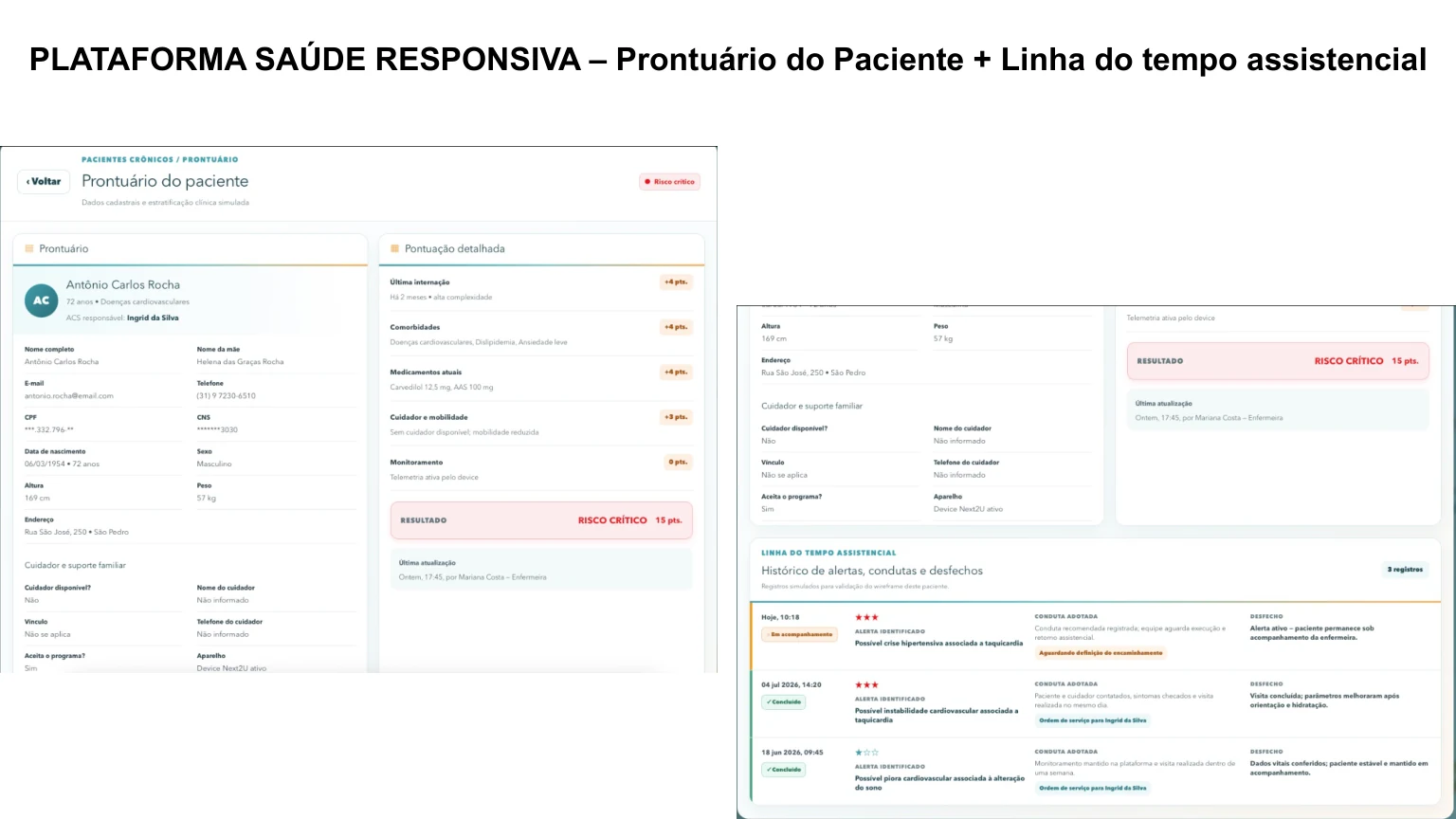
Organisation of patients by risk, comorbidity and designated professional. Tasks and visits can be tracked to maintain continuity with the Family Health team.
Monitoring information helps identify situations needing attention. Alerts guide the team's assessment, with records of actions taken and follow-up of outcomes.
A history bringing together relevant information, alerts, care decisions and progress. The timeline makes it easier to understand the patient's journey and maintain continuity between professionals.
Care continues after leaving hospital. The proposal provides for organising discharge information, communicating with primary care and following up the actions needed on returning home.
An organised view of demand, risks and the network's responses. Indicators support priority setting, allocation of responsibilities and improvement of care workflows.
Assess clinical and social criteria to determine who may benefit from follow-up.
Explain the purpose, limitations, privacy and how participation works.
Understand the person's baseline condition and care needs.
Define protocols, responsible professionals, contacts and response channels.
Track tasks, alerts and progress, with care plan reviews.
Better organised access and follow-up connected to the designated care team.
Information in one place and clarity about tasks and responsibilities.
Better conditions for monitoring the network and guiding decisions.
Remote monitoring supports teams' work. Care decisions remain with the responsible professionals, according to the network's protocols and care conditions.
Saúde Responsiva presentation — 16 August, version 3, supplied for this update. Operational images illustrate the proposed model.