

Lawmaking and oversight
Processes, documents, responsible staff and deadlines connected to institutional memory.
A new digital infrastructure for the legislature.
The Digital Democracy – Legislative Intelligence programme introduces Hermes DD: a platform designed to connect legislative functions in a common environment, with phased implementation and specialist operations in cooperation with each institution.
Explore the programme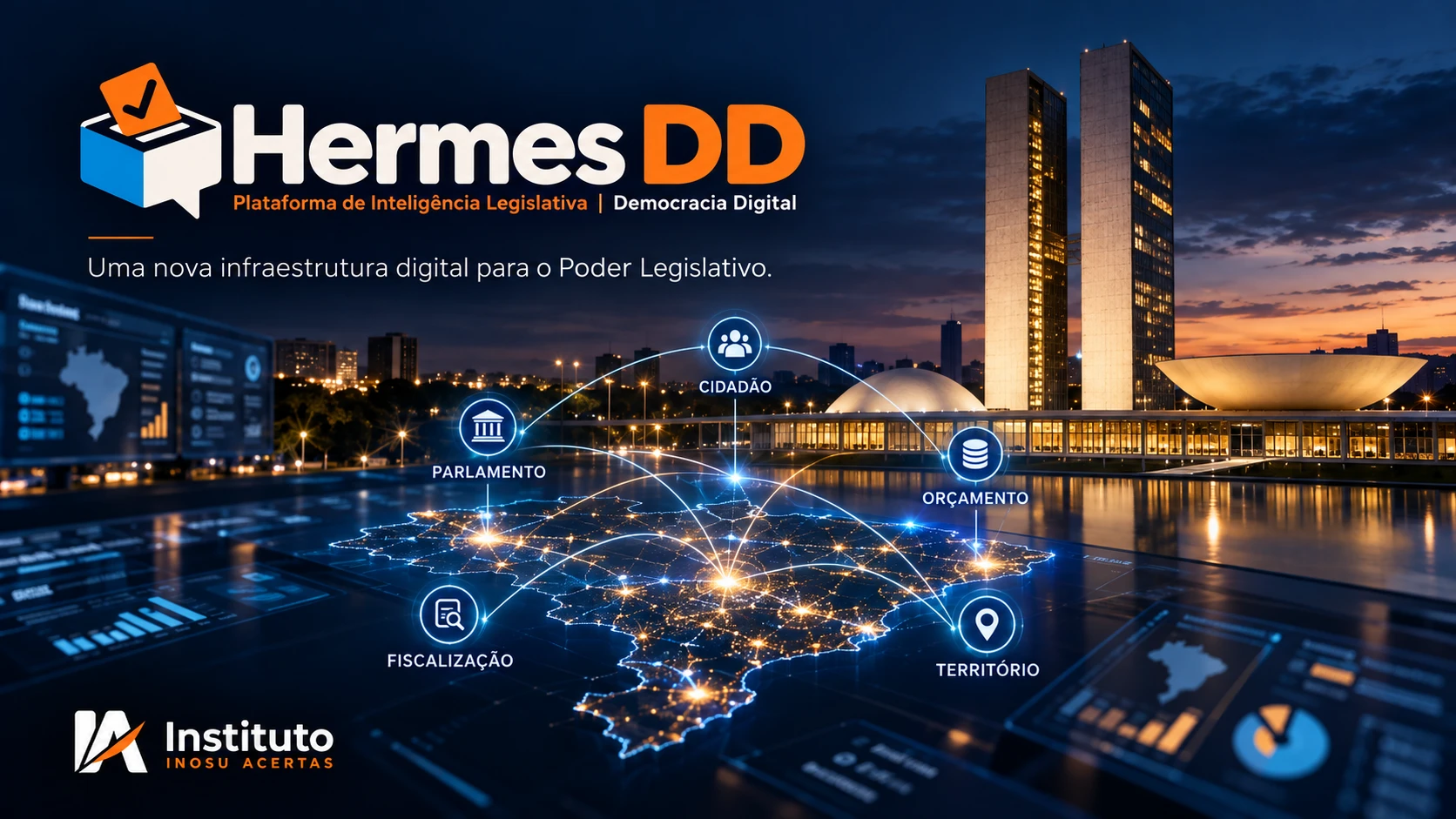
Laws, oversight, budgets and participation often operate in separate systems. Hermes DD proposes linking this information so a request can be tracked from its local origin through legislative analysis, resource allocation and verification of results. Configuration considers each legislature's powers, standing orders and operational capacity.
Processes, documents, responsible staff and deadlines connected to institutional memory.
Links between planning, budgets, budget amendments and local delivery.
Citizen participation with analysis, referrals and recorded feedback.
Organisation of drafting, filing, committees, rapporteurs, agendas, voting and publication. The standing orders engine provides for institution-specific proposal types, quorums, deadlines, signatures and workflows.
Recording requests, information requests, inquiries and hearings. Each action brings together evidence, responsible staff, deadlines, responses and follow-up measures within the legislature's powers.
Links between Brazil's multi-year plan (PPA), budget guidelines law (LDO), annual budget law (LOA), programmes and actions. Tracking the financial stages of budget amendments and evidence of physical delivery, subject to the availability and currency of official sources.
Public consultations, contributions linked to specific articles, digital hearings and debates. The proposal includes analysis and feedback with a rationale, a responsible person and a date, allowing each contribution to be tracked.
A channel for reporting issues with a location, description, images and documents. Teams screen reports, check their relevance, refer them to the appropriate bodies and track responses.
Thematic monitoring of health, education, mobility, the environment and other priorities. Indicators and maps help relate public needs to local conditions.
Semantic search, links between documents and summaries for technical support. The Hermes Assistant proposes answers accompanied by sources, subject to access permissions and human review.
Identity, roles, workflows, version control, signatures, notifications and auditing. A shared core organises services and preserves the institution's documentary history.
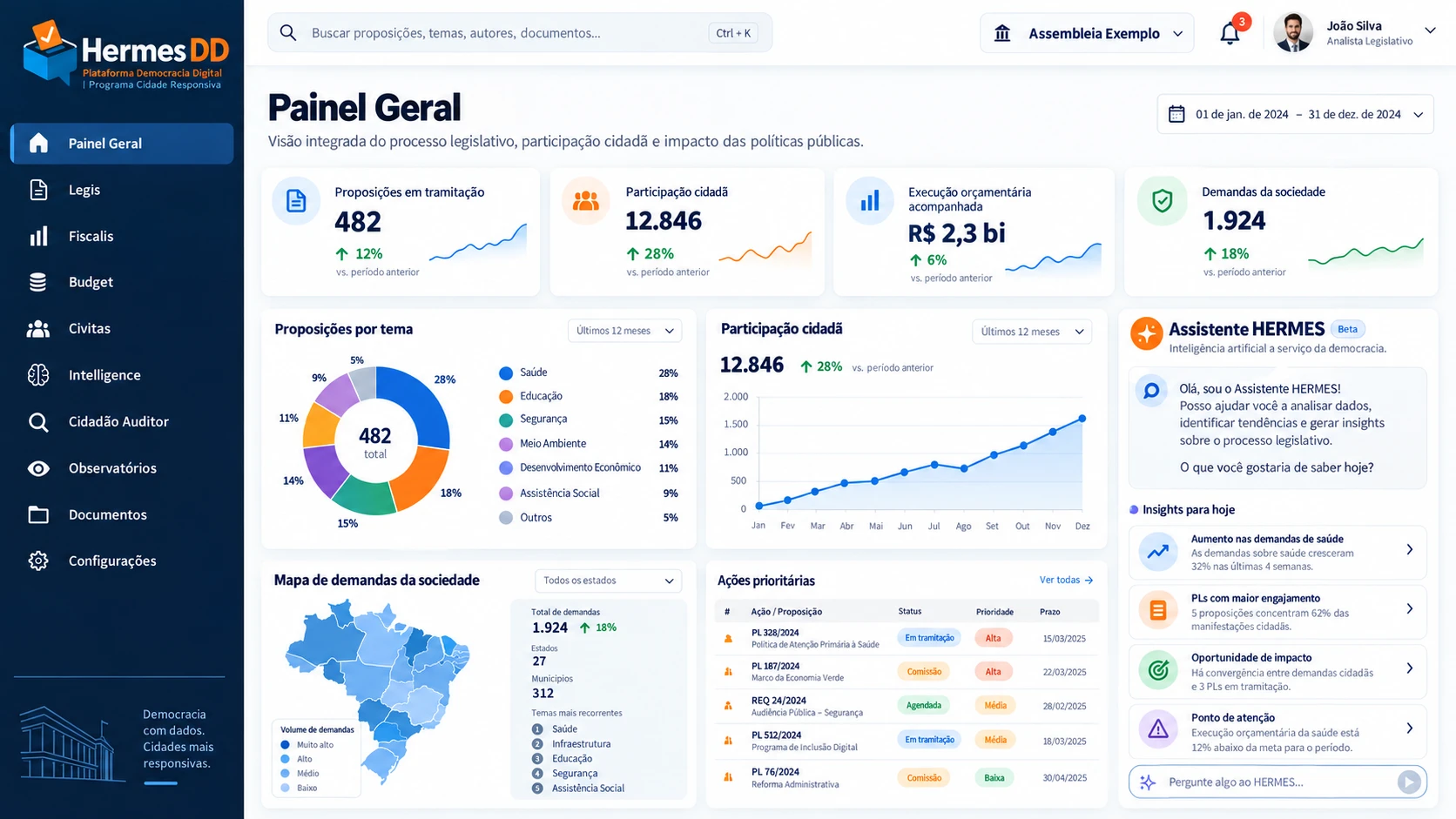
Unified navigation brings together search, indicators, tasks and role-specific alerts. The aim is to enable staff, advisers and legislators to examine an issue in context while retaining its links to proposals, resources, oversight and public needs.
Link documents, programmes, agencies, territories and indicators in a knowledge graph.
Flag approaching deadlines, unanswered requests and situations requiring technical assessment.
Preserve versions, rationales, referrals and decision records over time.
Explore the areas that make up the programme's approach.
Configuration covers proposal types, committee powers, quorums, legislative procedures, deadlines and exceptions. Version comparison, legal references and summaries support technical work. Rules and workflows must be validated by the legislature itself.
A budget amendment can be linked to its author, amount, implementing agency, municipality, programme and schedule. Financial tracking distinguishes approval, commitment, verification of amounts due and payment; physical delivery is verified through documentation and specific indicators. A financial transfer and the completion of a project or service are separate records.
The proposed journey connects information, consultation, contributions, analysis, deliberation and response. A feedback matrix records each contribution's status, rationale, responsible person and date. Local reports undergo screening and verification before informing analyses and actions.
Semantic search and the graph connect entities across the legislative domain. Assistant summaries and responses must cite sources, support verification and respect user permissions. Alerts identify situations for analysis; decisions, opinions and institutional acts remain a human responsibility.
The model organises web and mobile interfaces, APIs and orchestration, functional services, data, graphs and AI, alongside infrastructure. It provides for progressive integration with legislative and financial systems, official gazettes, portals and public databases. Connectors, permissions and update frequencies are defined after a technical assessment of each source.
The proposal includes access roles, segregation of duties, multifactor authentication, encryption, audit trails, backup and recovery. Governance must define the purposes, access, retention and processing of personal data. Measures are specified and verified during implementation in accordance with institutional policies.
The model brings together technology, processes, people and ongoing support. The centre can coordinate specialists in legislative operations, oversight and budgets, data and AI, security and digital participation. Staffing, equipment, routines and service levels are defined within each project's scope.
The legislature retains strategic direction, its powers and decisions, workflow validation and responsibility for official information. The operating organisation contributes technology, infrastructure, specialist staff, training, support and ongoing development in accordance with the cooperation agreement and established responsibilities.
Map the legislature's processes, systems, records, data and rules.
Configure Core, identity, security and priority integrations.
Implement the legislative process and validate the standing orders engine.
Connect oversight and budget monitoring.
Organise participation, screening and feedback.
Structure relationships, analysis and thematic monitoring.
Expand integrations and improve operations based on results.
Processing time, deadline compliance and the proportion of digital processes.
Contributions receiving feedback, response times and traceability of actions.
Data quality, availability, user satisfaction and budget amendment monitoring.
These are proposed monitoring dimensions, not proven results. Targets, baselines and evaluation criteria are agreed following the assessment. Features and integrations depend on scope, available sources and institutional validation.
Core, LEGIS and Documents: shared structure, legislative workflow and institutional memory.
Expansion with FISCALIS, BUDGET and CIVITAS according to agreed priorities.
Intelligence, Observatories and Cidadão Auditor connected to the legislature's sources and processes.
Explore the proposed configuration for state legislative assemblies and municipal councils. Content based on the institutional model “A new digital infrastructure for the Legislative Branch”, provided by IA Instituto.